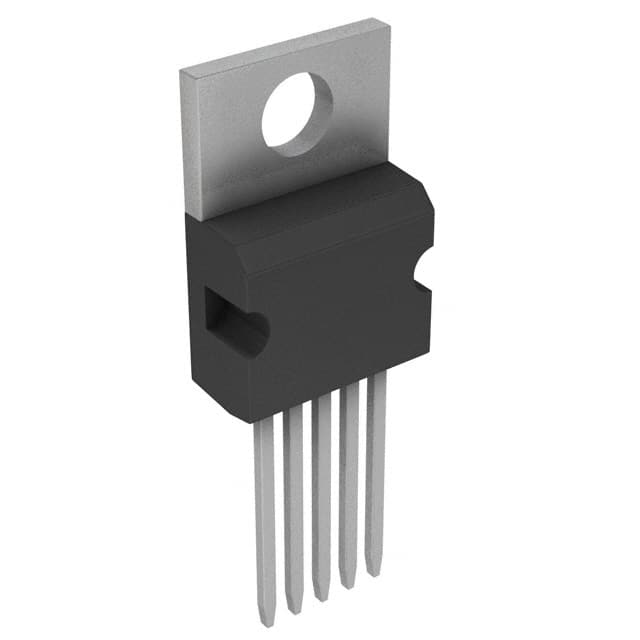
Choosing the right topology for an isolated DC converter isn’t just a technical detail — it defines the efficiency, reliability, and cost-effectiveness of your entire power system. This article breaks down the key characteristics, working principles, and design signals of Flyback, Forward, Push-Pull, Half-Bridge, and Full-Bridge topologies, helping you make informed decisions that align with your application’s power and performance goals.
Whether you’re designing for compact adapters or kilowatt-class datacenter racks, this guide provides clarity and actionable insights for engineers who want to get it right the first time.
Why Topology Choice Matters for an Isolated DC Converter
Many engineers underestimate just how much the topology shapes the entire system — until late-stage testing reveals unexpected inefficiencies, EMI failures, or heat buildup. The topology isn’t just a choice between five circuit diagrams; it’s a long-term commitment that influences certification readiness, maintenance costs, and field reliability.
For example, selecting Flyback in a 300W application might pass initial lab tests, but over time you’ll face overheating, higher losses, and potentially failed compliance. Likewise, overdesigning with Full-Bridge for a 30W circuit burns your budget without adding value.
Insight: “Think of topology as your system’s DNA — everything downstream inherits its traits.”
Instead of asking “What topology can I get to work?”, ask “What topology sets my design up for success over the product lifecycle?”
Flyback Topology in Isolated DC Converters

The Flyback converter remains the industry’s go-to solution for low-power, isolated applications — from plug-in adapters to control boards. It’s a single-switch topology that cleverly combines energy storage and galvanic isolation into the transformer itself, making it incredibly compact and cost-efficient for power levels below ~50W.
Its operating principle is simple yet elegant: the transformer’s magnetic field stores energy during the on-phase and releases it to the secondary during the off-phase. That dual-purpose transformer is what makes Flyback so appealing at small scales — it cuts out an entire stage of filtering, keeps component count low, and enables multiple outputs with minimal fuss.
This simplicity, however, is also its Achilles’ heel. Push it past its natural limits and you’ll see high ripple, falling efficiency, and thermal strain — all symptoms of forcing a topology out of its optimal range.
Choosing Flyback signals a design focused on cost-effectiveness and footprint efficiency, accepting its constraints for the sake of simplicity.
Representative models:
TI UCC28740 (controller) — optimized for low-power Flyback designs with high efficiency
ON Semiconductor NCP1251 — cost-effective controller for adapters and chargers
Vicor VI-J60 series — integrated Flyback module for small industrial power rails
| Characteristic | Performance |
|---|---|
| Typical power range | <50W |
| Efficiency | 65–80% |
| Ripple & noise | High at higher loads |
| Component count | Very low |
| BOM cost | Lowest among isolated topologies |
| Complexity | Minimal |
Forward Topology in Isolated DC Converters

When the application demands both isolation and cleaner performance in the 50–200W range, the Forward converter earns its place. Energy flows directly from the primary to the secondary while the switch is on, with an output inductor smoothing the current — rather than relying on stored energy in the transformer core.
This architectural shift explains its superior efficiency and lower ripple: separating isolation and storage functions enables better transformer utilization and reduced magnetic losses. Forward is also easier to scale beyond low power, making it a staple of telecom, industrial, and data equipment power supplies.
Selecting Forward conveys an engineering decision that prioritizes stability, efficiency, and regulatory readiness over bare-minimum design.
Representative models:
TI LM5025B — active Forward controller for telecom and industrial systems
Murata UWE series — Forward converter modules for 100–150W isolated supplies
Vicor VI-LU series — 150W Forward topology modules with high reliability
| Characteristic | Performance |
|---|---|
| Typical power range | 50–200W |
| Efficiency | 80–88% |
| Ripple & noise | Moderate, well-controlled |
| Component count | Slightly higher than Flyback |
| BOM cost | Still relatively low |
| Complexity | Modest (requires demagnetizing path) |
Push-Pull Topology in Isolated DC Converters

The Push-Pull converter stands out as the engineer’s intermediate solution for medium-to-high power (~100–500W). It alternates two switches to drive the transformer symmetrically, doubling core utilization and reducing switch stress compared to single-ended designs.
That symmetry is what makes Push-Pull attractive: more power delivered for the same input voltage, better efficiency, and effective transformer use. But it’s a topology that demands respect — even slight imbalance in drive signals or windings can saturate the core and introduce instability.
Opting for Push-Pull signals confidence in transformer and control design, choosing efficiency and scalability while accepting tighter tolerances.
Representative models:
Analog Devices LT3752 — Push-Pull controller for isolated high-efficiency designs
Vicor VI-J60 series — Push-Pull module for mid-power industrial and defense systems
ON Semiconductor NCP1562 — versatile Push-Pull PWM controller
| Characteristic | Performance |
|---|---|
| Typical power range | 100–500W |
| Efficiency | 85–90% |
| Ripple & noise | Moderate |
| Component count | Moderate |
| BOM cost | Moderate |
| Complexity | Medium–high (requires symmetry) |
Half-Bridge Topology in Isolated DC Converter
When power levels climb into the hundreds of watts, the Half-Bridge converter becomes a professional’s choice. Its two-switch, capacitive divider design applies balanced drive to the transformer, reducing voltage stress and keeping waveforms clean — traits valued in medical and industrial contexts.
What makes Half-Bridge special is how it delivers high power while maintaining a graceful balance between complexity and efficiency. Compared to Push-Pull, it’s more forgiving and less sensitive to asymmetry; compared to Full-Bridge, it’s easier and cheaper to implement while still meeting demanding specs.
Choosing Half-Bridge reflects a professional’s preference for graceful high-power delivery with no excess baggage.
Representative models:
TI UCC28251 — Half-Bridge PWM controller for high-reliability systems
Vicor VI-HAM series — Half-Bridge modular power units for 500–1000W range
Murata UXE series — compact Half-Bridge modules for medical and telecom
| Characteristic | Performance |
|---|---|
| Typical power range | 200–1000W |
| Efficiency | 88–92% |
| Ripple & noise | Low |
| Component count | Higher |
| BOM cost | Medium–high |
| Complexity | Medium–high |
Full-Bridge Topology in Isolated DC Converters

At the top of the hierarchy sits the Full-Bridge converter, the only sensible choice when designs demand kilowatt-level isolated power. With four switches working in a full-cycle, fully symmetrical drive, it achieves maximal transformer utilization, high efficiency, and superior performance under the heaviest loads.
But this kind of muscle is not casual. More switches, more complex control, and higher cost all come with the territory. Full-Bridge is the statement of a design that refuses compromise, prioritizing pure power and robustness even when easier options exist.
Selecting Full-Bridge signals a no-compromise approach to power density and reliability — engineering for the upper echelon of performance.
Representative models:
Analog Devices LTC3722 — Full-Bridge controller for kilowatt-class systems
Vicor VI-B60 series — Full-Bridge modules for high-end industrial cabinets
Murata UXW series — Full-Bridge modules for base stations and datacenters
| Characteristic | Performance |
|---|---|
| Typical power range | >500W–kW+ |
| Efficiency | 90–95% |
| Ripple & noise | Very low |
| Component count | Highest |
| BOM cost | Highest |
| Complexity | High |
How to Select the Right Topology for Your Isolated DC Converter
Choosing the right topology for an isolated DC converter is a balance of trade-offs — power, cost, complexity, efficiency, and design constraints. No topology is universally “better.” This quick reference table helps you align your application’s needs with the right design choice.
| Criterion | Flyback | Forward | Push-Pull | Half-Bridge | Full-Bridge |
|---|---|---|---|---|---|
| Typical Power Range | <50W | 50–200W | 100–500W | 200–1000W | >500W–kW+ |
| Efficiency | Low–Moderate | Moderate–Good | Good | High | Very High |
| Complexity | Very Low | Low | Medium–High | Medium–High | High |
| Cost | Lowest | Low | Moderate | Medium–High | Highest |
| EMI/Noise | High at higher loads | Moderate | Moderate | Low | Very Low |
| Footprint | Compact | Small–Medium | Medium | Medium–Large | Large |
| Preferred Applications | Adapters, controls | Telecom, chargers | UPS, industrial | Medical, automation | Datacenter, base station |
Actionable advice:
Define your power needs and budget.
Factor in space, noise, and regulatory requirements.
When in doubt, consult an expert — it’s better than redesigning later.
Conclusion
Choosing the right isolated DC converter topology is less about what’s “best” and more about what’s “right for your application.” Every topology has its sweet spot — it’s up to you to find the one that fits like a glove.