When it comes to powering sensitive electronics, the wrong choice of power converter can be like putting a square peg in a round hole — inefficient, unsafe, and costly in the long run. That’s where isolated DC-DC converters step in, offering a robust solution for designs where safety, noise immunity, and reliability are paramount.
In this guide, we’ll break down what makes an isolated DC-DC converter tick, when and why you should use one, how to select the right model, and even bust a few common myths. Whether you’re a design engineer, a procurement specialist, or simply power-curious, you’ll walk away equipped with practical knowledge and actionable insights.
What Is an Isolated DC-DC Converter?

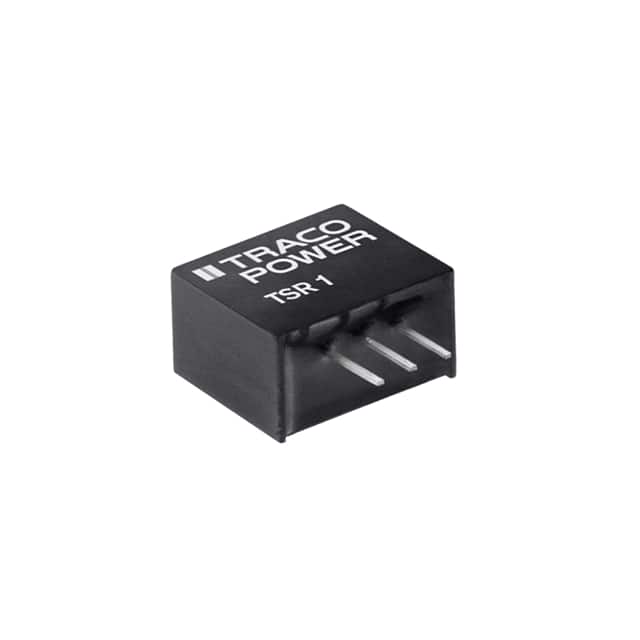
An isolated DC-DC converter is a power supply module that converts one DC voltage to another while electrically isolating the input and output.
This electrical isolation — usually achieved through a transformer — is like a polite but firm handshake between two circuits: they exchange energy, but no direct electrical connection exists. This feature is crucial in systems where ground loops, noise interference, or safety regulations would otherwise cause trouble.
Key characteristics:
- Electrical isolation (typically 500V–5000V)
- Compact and efficient
- Available in a wide range of input/output voltages and power levels
Key Specifications of Isolated DC-DC Converters

Designing with isolated DC-DC converters demands more than just matching voltages — it’s about optimizing efficiency, stability, power density, and reliability. Here are the core specifications that truly matter:
Efficiency
Efficiency drives battery life, heat dissipation, and system size. Key losses come from:
MOSFETs: Conduction (I²R) and switching losses. Use low-Rds(on) MOSFETs and fast drivers.
Diodes: Forward drop and switching losses. Prefer Schottky or synchronous rectification.
Magnetics & capacitors: Minimize core losses, copper losses, and ESR with quality components.
PCB layout: Short, wide traces reduce resistance and improve high-frequency behavior.
Power Density
Today’s designs demand more power in less space. To increase power density:
Employ 3D packaging and magnetic integration.
Use wide-bandgap semiconductors (GaN, SiC) for higher frequencies and lower losses.
Optimize cooling — higher frequency allows smaller passives and compact designs.
High-end prototypes achieve >10W/cm³ or >20kW/L with advanced cooling and materials.
Voltage Regulation and Stability
Tight regulation (typically ±3–5%) ensures load safety and performance.
Closed-loop: Precise, with feedback and optocouplers.
Open-loop: Simpler, but voltage varies with load/input.
Semi-regulated: Balanced solution, feedback without optocouplers.
EMC and Thermal Management
Switching isolation introduces EMI and heat — both must be controlled.
Optimize PCB layout to minimize noise loops and parasitic impedance.
Add shielding, LC filters, and soft-switching techniques to reduce EMI.
Use effective cooling — from heatsinks and airflow to immersion cooling for extreme densities.
Pro tip: These specs aren’t just numbers — they’re the foundation of a safe, efficient, and reliable power system. Neglect them at your own (and your design’s) peril.
Advantages and Disadvantages of Isolated DC-DC Converters
So, do you really need isolation? Let’s weigh the pros and cons of isolated vs. non-isolated converters to help you decide.
| Feature | Isolated DC-DC Converter | Non-Isolated DC-DC Converter |
|---|---|---|
| Advantages | Improves safety with input-output isolation Prevents ground loops and noise interference Supports high isolation voltage for sensitive applications |
Higher efficiency Smaller size and lower cost Simpler design for space-constrained systems |
| Disadvantages | Lower efficiency compared to non-isolated Larger footprint and higher component count Higher cost |
No electrical isolation Prone to ground loops and EMI issues Unsuitable for high-safety or noisy environments |
Common Topologies of Isolated DC-DC Converters

Isolated DC-DC converters rely on a transformer to transfer energy while maintaining electrical isolation. Topologies are broadly divided into two categories:
- Forward-type like forward, full-bridge: energy flows directly to the load during the switch-on period.
- Flyback-type like flyback, buck-boost: energy is first stored in the transformer and then released when the switch turns off.
The choice of topology depends on specific requirements such as power level, cost, size, and regulation needs.
Flyback Converter: Features and Applications
The flyback converter is the most common isolated topology, valued for its simplicity, low cost, and ability to provide multiple outputs. It stores energy in the transformer during switch-on and delivers it to the output during switch-off. The transformer here acts more like coupled inductors, as energy transfer is sequential.
Advantages:
- Suitable for high step-down voltage ratios
- Supports multiple outputs by adding secondary windings
- Minimal component count and good cost efficiency
- Regulation via optocoupler or primary-side sensing
Challenges:
- Transformer design requires care to prevent saturation and excessive losses
- High peak currents and voltage stress can reduce efficiency and reliability
- Leakage inductance and parasitic capacitance can cause ringing and EMI
- Snubber or clamp circuits are often needed to suppress voltage spikes
Variants and Applications:
Quasi-resonant flyback improves efficiency and EMI by synchronizing switching with voltage valleys. Typical power range is up to 200 W in single-ended designs, with higher power achievable in modular configurations. Common in AC/DC adapters, battery chargers, gate drivers, and low-to-medium power supplies.
Top Isolated DC-DC Converter Models and Brands
Choosing a reliable isolated DC-DC converter often comes down to proven brands and their flagship models. Well-known manufacturers offer a wide range of modules covering different power levels, isolation ratings, and form factors. Below are some of the most reputable brands and popular product lines to consider:
| Brand | Popular Series/Models | Key Features & Applications |
|---|---|---|
| Murata Power Solutions | NXE, NMV, MEJ, MEV | Compact 1–3W modules with reinforced isolation; ideal for medical and industrial signal isolation |
| RECOM Power | Rxx, RAC | Cost-effective industrial modules and AC/DC isolated solutions; suited for controls and automation |
| Vicor Corporation | BCM, DCM | High-efficiency, kilowatt-class converters; designed for data centers, aerospace, and defense |
| TDK-Lambda | i6A, i3A | Medical-grade certified, wide temperature range; used in telecom and servers |
| Texas Instruments | ISOW, DCDC | Compact isolated modules and controller ICs; great for embedded and small form factor designs |
| Traco Power | TMR, THN | Rugged, versatile converters for railway, industrial, and instrumentation applications |
How to Select the Right Isolated DC-DC Converter
Feeling overwhelmed by the options? Don’t worry — here’s a simple checklist:
Define your input and output voltage and load power.
Check if your application has a mandatory isolation requirement (e.g., medical standards).
Choose an isolation voltage rating suitable for your safety class.
Compare efficiency and footprint for your layout constraints.
Select reputable brands known for reliability — think Murata, RECOM, Vicor.
Stability requires proper compensation to prevent oscillations and overshoot. Design feedback loops carefully, especially in topologies prone to right-half-plane (RHP) instability.
Conclusion
Isolated DC-DC converters are the unsung heroes of safe and reliable power delivery. They protect your circuits, eliminate noise headaches, and keep your designs compliant with industry standards. Sure, they cost a little more — but so does peace of mind.
When designing your next project, don’t cut corners on power. Choose wisely, and your systems will thank you with years of trouble-free operation.