From the hum of your wall outlet to the smooth current inside your smartphone, the transition from AC to DC power is both subtle and essential. Whether you're building a custom power supply or trying to understand what fuels your favorite electronics, knowing how to convert AC voltage to DC is a foundational skill in electronics and electrical engineering.
This guide will help you master the core concepts, avoid common pitfalls, and confidently select the right solution for your needs. Whether you're a hobbyist, a professional engineer, or simply curious, you're in the right place.
What Does "Convert AC Voltage to DC" Mean?
Electricity comes in two flavors:
Alternating Current (AC): The type of electricity that flows from your power outlets. It changes direction periodically (typically 50 or 60 Hz).
Direct Current (DC): Electricity that flows in one constant direction. This is the form most electronic devices use internally.
Why Convert AC to DC?
Most household power sources are AC, but nearly all electronic devices (phones, laptops, LED lights, etc.) run on DC. The conversion process makes these devices compatible with the power grid.

How Does AC to DC Conversion Work?
AC to DC conversion is a multi-stage process that transforms alternating current into a steady direct current suitable for electronic circuits. Let’s break down the process:
Step-by-Step Breakdown:
Voltage Adjustment
First, the incoming AC voltage is adjusted using a transformer. This may step the voltage up or down depending on the desired DC output. For example, 230V AC may be stepped down to 12V AC.
Rectification
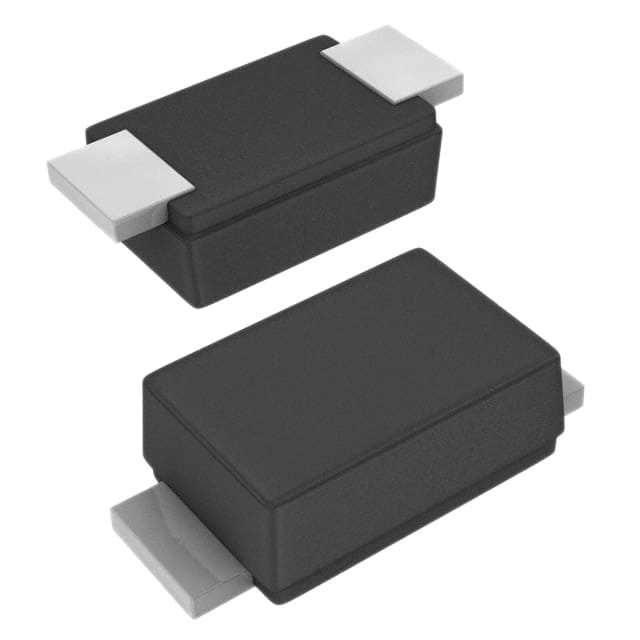
Next, the adjusted AC passes through a rectifier circuit—typically using diodes—that converts it to a pulsating DC. The most common method is full-wave rectification, which utilizes both halves of the AC cycle.
Filtering
Since rectified DC is not smooth, a filter—usually a capacitor—is added to eliminate most of the ripple and produce a more consistent voltage. Larger capacitors smooth the voltage more effectively but may increase cost and size.
Voltage Regulation
Finally, voltage regulators (either linear or switching types) ensure that the output voltage remains stable even if the input voltage or load conditions vary. This is crucial for sensitive electronics that require a constant voltage.

Types of AC-DC Converters
Linear Power Supplies: These use the above steps in sequence and are known for their simplicity and low noise. However, they are less energy-efficient and can be bulky.
Switch Mode Power Supplies (SMPS): These convert AC to DC by switching on and off rapidly and using high-frequency transformers. They are compact, efficient, and widely used in modern electronics.
How to Choose the Right AC-DC Converter for Your Needs
When selecting an AC-DC converter, ask yourself:
- What is my required output voltage and current?
- How much power does my load consume?
- Will the converter operate in a harsh environment (e.g., heat, dust)?
- Do I need isolation between input and output?
Once you've answered these questions, here’s how to apply them:
- Match Voltage and Current Ratings: Choose a converter whose output voltage matches your device's requirement and can supply at least 20–30% more current than your load needs, providing a safety margin.
- Check Power Rating: Multiply your required voltage and current to find the minimum power (in watts) your converter must supply. Then choose a converter with at least 25% overhead.
- Environmental Considerations: For dusty or hot environments, opt for enclosed converters with higher temperature ratings and passive cooling fanless designs.
- Isolation Needs: If your application involves sensitive electronics or medical equipment, choose an isolated power supply to prevent noise and electrical faults.
- Regulation and Noise Tolerance: Select a regulated converter for applications requiring stable voltage and low ripple, especially important for microcontrollers, sensors, or audio circuits.
- Form Factor and Mounting: Consider physical space, connector types, and whether you need DIN rail, PCB mount, or chassis mount formats.
Key Selection Factors:
Efficiency rating
Cooling method (fan vs. passive)
Safety certifications (UL, CE, etc.)
Size constraints and mounting options
Pro Tip: For sensitive electronics, always choose a regulated converter.
What Are the Main Uses and Benefits of AC to DC Conversion?
From the smallest gadgets to industrial behemoths, AC-DC conversion is everywhere:
- Consumer Electronics: Chargers, TVs, laptops
- Industrial Applications: PLCs, control panels
- Medical Devices: Imaging equipment, monitors
- Automotive: EV chargers, onboard electronics
- Aerospace: Navigation and avionics systems
Why It Matters
- Enables portability and miniaturization
- Increases energy efficiency
- Supports precise electronic control
- Comparison of Representative AC-DC Converter Models
Comparison of Representative AC-DC Converter Models
Choosing the right converter can be daunting with so many models on the market. Here's a closer look at some widely used units and what sets them apart:
| Model Name | Output Voltage | Max Current | Efficiency | Form Factor | Key Features | Ideal For |
|---|---|---|---|---|---|---|
| Mean Well LRS-75 | 12V | 6.2A | 89% | Enclosed metal | Reliable, budget-friendly, screw terminals | DIY projects, LED strips |
| RECOM RAC05-G | 5V | 1A | 80% | PCB-mounted | Compact, medical-certified, isolated | Embedded applications |
| TDK-Lambda HWS50 | 24V | 2.1A | 88% | Industrial case | Rugged, low ripple, long MTBF | Factory automation |
| Delta PMT-12V50W | 12V | 4.2A | 86% | DIN rail mount | UL/CE certified, wide input range | Control panels, general use |
How to Use This Table
Space-constrained projects? Go for compact or PCB-mount models.
High reliability or medical use? Look for models with certifications and isolation.
Need simple plug-and-play? Enclosed or DIN rail converters often simplify installation.

Leading Manufacturers in the AC-DC Conversion Industry
The AC-DC conversion landscape is dominated by a few trusted manufacturers, each with their own specialties:
Mean Well
Strengths: Cost-effective, broad product range
Popular For: General electronics, LED lighting, maker projects
Flagship Series: LRS, NES, HLG
TDK-Lambda
Strengths: Premium reliability, industrial-grade durability
Popular For: Medical, laboratory, and automation applications
Flagship Series: HWS, LS, ZWS, Genesys+ programmable supplies
Delta Electronics
Strengths: Wide voltage options, compact SMPS
Popular For: Telecom, industrial control, automation
Flagship Series: PMT, CliQ, Chrome DIN rail series
RECOM Power
Strengths: Board-level modules, wide input range, medical certs
Popular For: IoT, embedded systems, space-limited designs
Flagship Series: RAC, R-78xx, RP series
What Sets These Brands Apart?
- Support and Documentation: Brands like TDK-Lambda and RECOM offer extensive datasheets and application notes.
- Certifications: Look for UL, CE, RoHS, and EN standards based on your application.
- Longevity: Mean Well and Delta are known for stable supply chains and long product life cycles.
By aligning your needs with these brand strengths, you’ll make a more informed and confident choice.—explore based on your project's needs.
Common Mistakes to Avoid When Converting AC to DC
Even seasoned engineers slip up. Here are frequent missteps:
Underestimating power needs – can lead to overheating or failure
Poor filtering – results in noisy output and unstable performance
Skipping heat dissipation – shortens lifespan of the converter
Neglecting surge protection – a small spike can cause big damage
Insert image of "Burnt AC-DC power supply due to overload" here
Safety Tips and Precautions
Working with AC voltage is not for the faint-hearted. Here’s how to stay safe:
Always disconnect power before working on circuits
Use appropriate fuses and circuit breakers
Ensure proper grounding and insulation
Don’t exceed rated voltage and current
Remember: Electricity is invisible but unforgiving.
Conclusion
Converting AC voltage to DC isn't just an electrical trick—it's the invisible handshake between the power grid and modern technology. With the right knowledge and tools, you can create more reliable, efficient, and safe electronic systems.
Whether you're powering an Arduino or specifying an industrial control cabinet, remember: the smoother the current, the stronger the system.