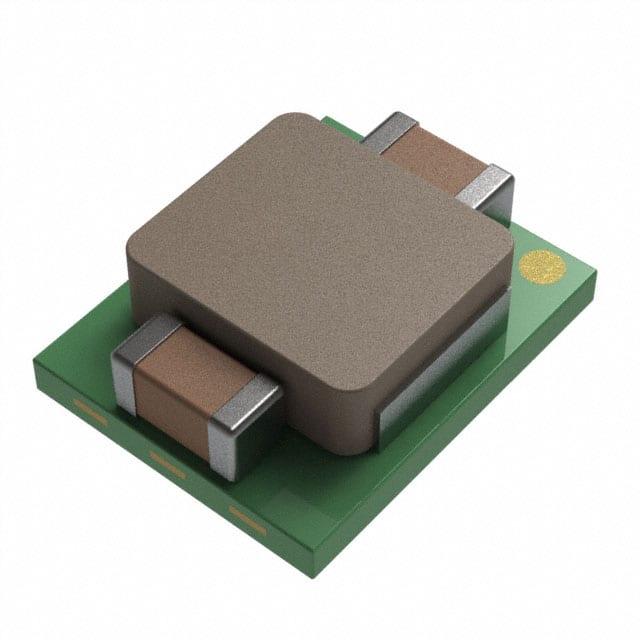
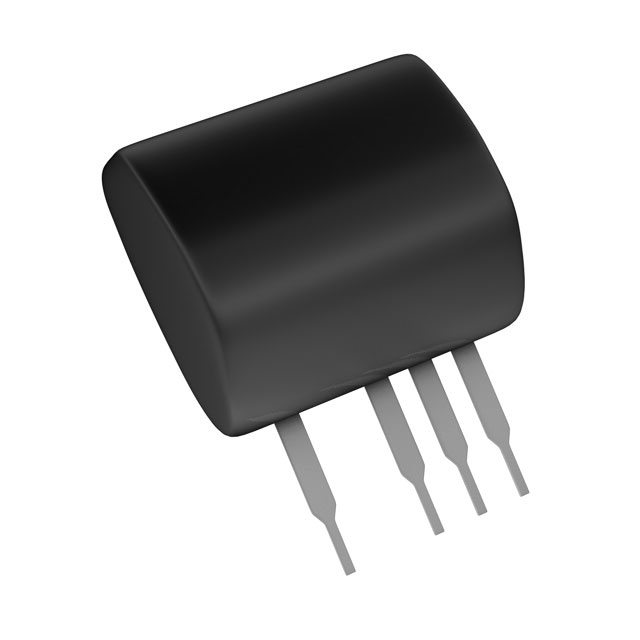
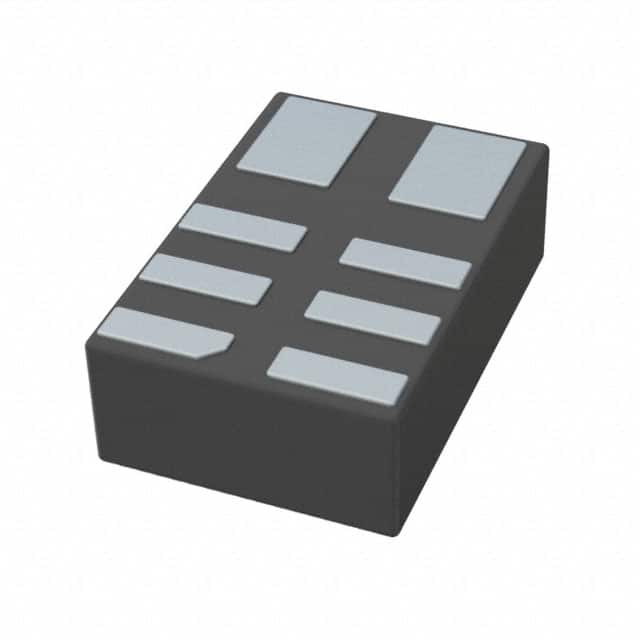
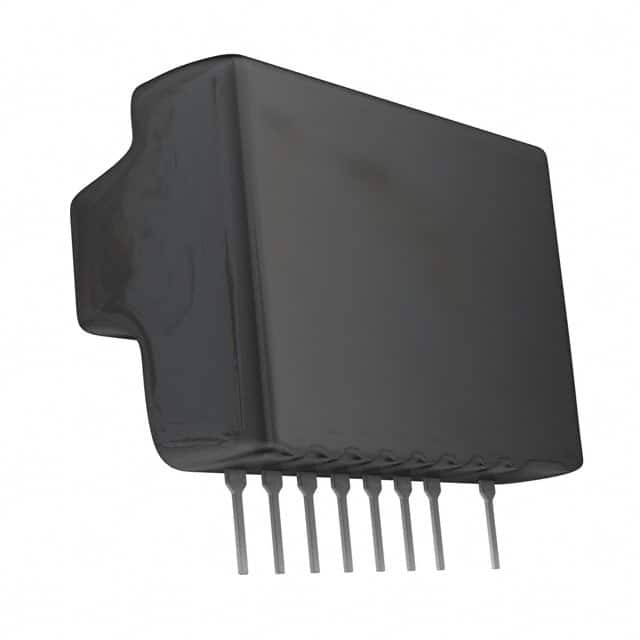
When your power supply doesn't quite make the cut—say, your battery only offers 3.7V but your circuit needs 5V—enter the DC-DC step-up converter, the unsung hero of voltage transformation.
While it's tempting to think of all power converters as interchangeable, choosing the wrong type can lead to inefficiencies, overheating, or outright circuit failure. In this guide, we’ll break down exactly when, why, and how to use a DC to DC step-up converter—and how it stacks up against other converter types.
What Is a DC to DC Step-Up Converter?

A DC-DC step-up converter, also known as a boost converter, increases the input voltage to a higher, stable output voltage. It does this by storing energy in an inductor and then releasing it at a higher potential. It’s commonly used in:
- Battery-powered devices that require more than their native cell voltage
- LED drivers
- Solar-powered systems
- Portable USB charging modules
It’s a simple concept with profound applications, but it's not a one-size-fits-all solution. Let’s compare it with other popular converter types.
Common Power Converter Types Compared
| Converter Type | Input Voltage | Output Voltage | Isolation | Efficiency | Typical Use |
|---|---|---|---|---|---|
| Buck | > Vout | < Vin | No | High | Battery-powered systems |
| Boost | < Vout | > Vin | No | Medium-High | LED drivers, sensor circuits |
| Buck-Boost | < or > Vout | < or > Vin | No | Moderate | Automotive systems |
| SEPIC | Flexible | Flexible | No | Moderate | Industrial controls |
| Flyback | Any | Any | Yes | Medium | Isolated AC/DC or DC/DC |
Boost Converter vs Buck Converter

At a glance, boost and buck converters are mirror opposites—one steps voltage up, the other steps it down. But in practical design, engineers care more about the subtleties: efficiency, thermal behavior, voltage ripple, and startup performance.
- Why does my buck converter run cooler than a boost at similar loads?
- Can I rely on a boost converter to power a 5V USB device directly from a lithium battery?
- Why does my boost circuit struggle with load regulation?
Buck converters tend to excel in high-efficiency, high-current, low-voltage designs. Boost converters, while more compact for raising voltages, need careful layout and component selection to avoid noise, ripple, and overheating—especially under load.
When choosing between the two, users are most concerned with:
- Load stability
- Efficiency at rated current
- Ripple behavior near light load
- Thermal performance in compact enclosures
The choice often comes down to: Is your input voltage reliably above your output requirement? If yes, buck is likely better. If no, and you need to lift the voltage, boost is the logical fit—but keep an eye on ripple and layout.
Boost vs Buck-Boost and SEPIC

Boost converters work well—until your input voltage rises above your desired output. That’s when designs start to fail, particularly in battery-powered or solar systems where voltages fluctuate.
Here’s what users want to know:
- Will a standard boost converter maintain 5V output if my battery ranges from 3V to 6V?
- What happens when input voltage crosses output target?
- Is SEPIC or buck-boost better for my mixed-voltage application?
Buck-boost converters handle inputs above or below the desired output but often invert polarity unless you use 4-switch or advanced control schemes. SEPIC converters provide non-inverting output with a wider range but require more components and layout attention.
Common concerns:
- Efficiency under variable load conditions
- Ripple and EMI in switching environments
- Space constraints for dual inductor topologies
The bottom line: If your application involves fluctuating inputs around your desired output, consider SEPIC or buck-boost. They're more forgiving and flexible—just be ready for slightly more complex design and filtering needs.
Boost Converter vs Isolated Converters

For safety-critical or noise-sensitive applications, users often consider isolated converters like flyback instead of boost.
Real design questions include:
- Do I need galvanic isolation for medical or industrial safety?
- How do I handle multiple output rails from a single supply?
- Can a boost converter meet EMI standards in sensor systems?
Boost converters are compact, cost-efficient, and simple—ideal for non-isolated environments. However, for systems that demand electrical isolation, noise immunity, or multi-output regulation, flyback and other isolated topologies are often preferred.
Key user trade-offs:
- Size and cost vs. safety and compliance
- Simplicity vs. isolation capability
- Ripple sensitivity vs. robust protection
If your system demands electrical separation or must pass strict EMI standards, go isolated. For most consumer electronics and embedded systems, a boost converter offers the right balance of cost and convenience.
DC to DC Step-Up Converter in Real-World Applications
For many engineers, makers, and even experienced technicians, using a DC to DC step-up converter sounds straightforward—until reality hits. From mismatched voltages to thermal meltdowns and debugging nightmares, the gap between theory and application is often wider than expected. Let’s look at real cases where step-up converters shine—and where they stumble.
Vehicle and Portable Power
It’s common to assume that using a step-up or step-down converter for mobile power applications is plug-and-play, especially when working with familiar voltages like 12V. But in practice, mismatched expectations can lead to major reliability issues.
In one case, a user attempted to power a 12V trolling motor using a buck converter connected to an e-bike battery. On paper, the setup looked fine. But under real-world conditions, the converter overheated and performance plummeted due to excessive current draw and poor thermal design. Another user reported trying to use a boost converter to power a laptop from a 12V supply, only to experience severe voltage sag and instability.
These cases reveal a core issue: converter selection must account for both voltage and current requirements—not just the voltage level alone. Misunderstanding this often leads to:
Overheating or inefficient power conversion
Sudden voltage drops under load
Devices resetting or shutting down during operation
“I tried a step-down converter to run a 12V trolling motor off of an e-bike battery... The amount of current lost to heat was very substantial. I would expect problems with heat but mostly voltage sag as current draw increases. The laptop won't like that.”
The lesson? Don’t rely on specs alone—understand your load’s behavior and test under full conditions. Mobile power isn’t just about portability—it’s about matching the right converter to the realities of fluctuating demand.
High‑Voltage Boosting
Pushing a few volts up to several kilovolts sounds exotic, but hobbyists and R &D teams do it every day for Geiger counters, piezo drivers, and compact X‑ray tubes. The catch? Those tiny “15 W / 3 kV” modules you see online are highly spec‑sensitive.
When one maker tried to raise 5 V to 3 kV at 1 W for a particle‑detector, the first module failed within minutes. After inspection, we found three root causes:
Input headroom misunderstood – the unit needed at least 7 V to start reliably.
Creepage distance – bare‐board pins arced over in humid air.
Hidden duty‑cycle limits – the datasheet’s “1 W” rating assumed 25 °C and a metal chassis as a heatsink.
“My project needs to boost 5 V up to over 3 000 V… I’m not familiar with the available modules and don’t want to pick the wrong one.”
High‑voltage boosters demand more than voltage and power math. Check input start‑up range, isolation ratings, and thermal derating. If the vendor can’t supply detailed curves, keep shopping.
3D Printing and Industry
Many desktop 3‑D printers ship with 12 V electronics yet benefit from 24 V rails for faster heat‑ups and snappier steppers. Makers often drop in an off‑the‑shelf boost module—until it melts.
In one real‑world test, boosting 12 V to 20 V for a 120 W heated bed produced:
Peak draw of 10 A on the input side ‑ beyond the inductor’s 6 A rating.
Converter case > 90 °C even with a fan.
EMI bursts that reset the USB connection when the nozzle heater cycled.
“Boosting 12 V to 20 V only provides ≈5 A at 85 % efficiency—and only with active cooling. Switching converters generate a significant amount of noise on both sides.”
What this teaches:
Databook efficiency assumes ideal airflow; add heatsinks or derate by 30 %.
Check current limits before voltage—industrial loads care about amperes first.
Plan for filters: a $2 LC filter is cheaper than chasing random layer shifts caused by EMI.
Conclusion
While the DC-DC step-up converter is elegant in its simplicity, choosing it blindly can cause more harm than good. Understand your system’s voltage profile, isolation needs, and efficiency demands before picking a topology. Boost is powerful—but only when it’s the right fit.