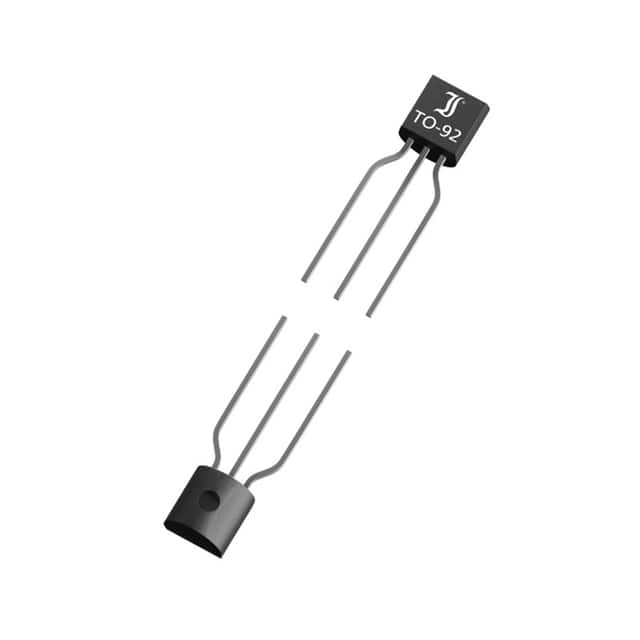
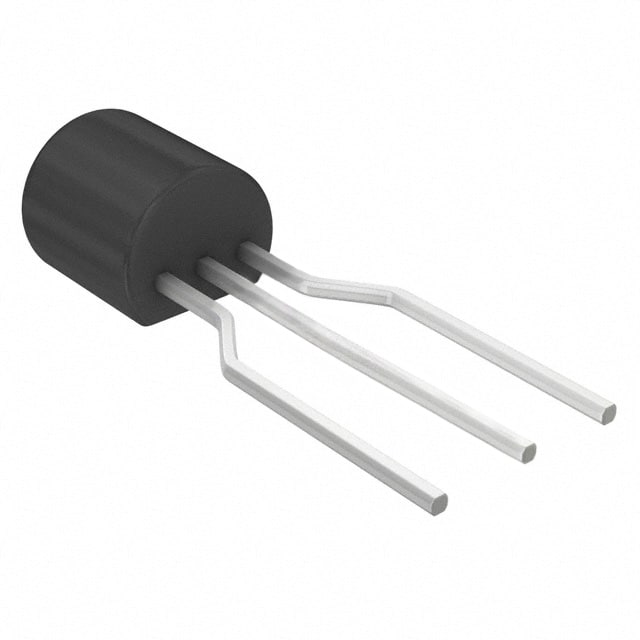
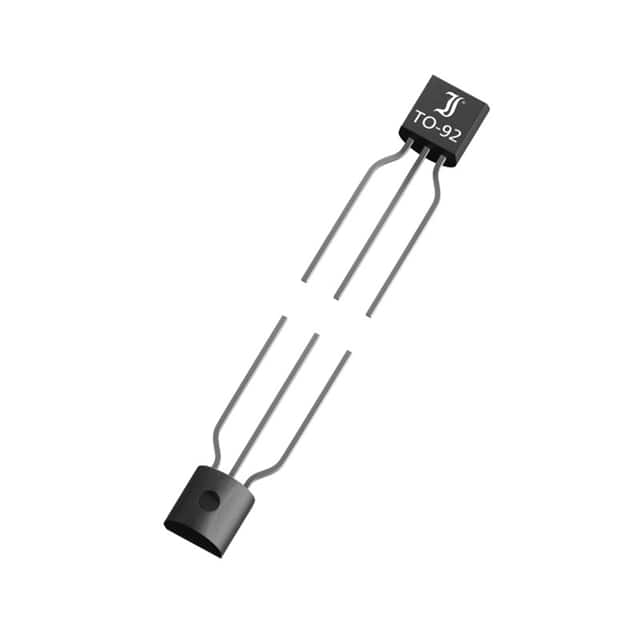
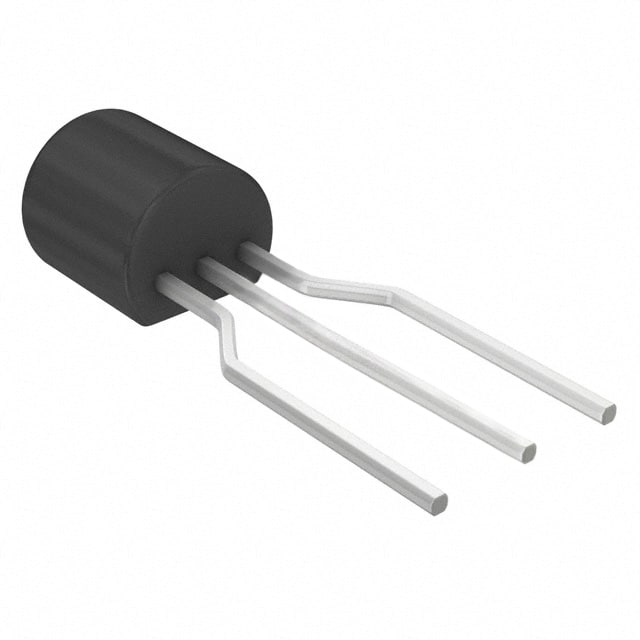
The 2N3904 is widely recognized as a reliable, small-signal NPN transistor.
It’s a workhorse in electronics, used for everything from simple hobby circuits to sophisticated designs in commercial products.
But what makes this transistor tick?
The key lies in its datasheet, a detailed guide that outlines its capabilities and limitations.
Without the datasheet, it's easy to misapply components, leading to inefficiency or even circuit failure.
In this article, we’ll break down the crucial aspects of the 2N3904 datasheet, exploring its features, specifications, and practical applications.
You’ll get a better understanding of why the 2N3904 is a go-to transistor in countless electronic projects.
Understanding the 2N3904 Transistor Pinout

Let’s start with the pinout — a simple yet essential detail that many overlook.
The collector, base, and emitter pins are where all the action happens.
The collector is the current output pin, where current flows out of the transistor.
It’s crucial to ensure the collector pin is wired correctly, as it influences the transistor’s ability to handle current.
The base, on the other hand, is the control pin.
A small current here controls a much larger current from the collector to the emitter.
It’s the gatekeeper that makes the transistor “switch” on or off.
Finally, the emitter pin serves as the input for current to flow into the transistor.
If you’ve got these pins properly configured, you’re halfway to getting your transistor to work as expected.
Key Features of 2N3904 Transistor
The 2N3904 stands out because of its low power consumption.
This makes it an excellent choice for energy-efficient circuits, especially when you're dealing with battery-powered devices.
In addition to its efficiency, it excels in high-frequency applications.
It’s often used in audio amplifiers, radio frequency circuits, and even oscillators for generating stable waveforms.
Its compact TO-92 package ensures that it fits snugly into designs where space is a premium.
This small package doesn’t sacrifice functionality; rather, it allows you to pack more power into smaller devices.
The 2N3904’s combination of low energy usage, high-frequency performance, and small form factor makes it a fantastic all-rounder in the world of small-signal transistors.
2N3904 Transistor Specifications and Electrical Characteristics
Now, let’s dive into the electrical characteristics that define the 2N3904’s limits.
First, its collector-emitter voltage (V_CEO) of 40V is an important figure to keep in mind.
Never exceed this voltage, or you risk damaging the transistor.
The collector current (I_C) rating is 200mA, a reasonable value for low-power applications.
This ensures that the transistor won’t be overloaded in typical circuits, but it won’t handle heavy currents.
The total power dissipation (P_TOT) is 625mW, which tells us how much heat the transistor can safely dissipate during operation.
The DC current gain (hFE) ranges from 100 to 300, making the 2N3904 an efficient amplifier for weak signals.
The transistor works best in environments where the current gain can amplify small signals effectively.
Always stay within these limits to ensure reliable and efficient operation.
Common Applications of 2N3904 in Electronic Circuits
The 2N3904’s versatility shines through in its many applications.
One of the most common uses is in amplification circuits, particularly in low-power audio.
By boosting weak signals, the 2N3904 makes sound clearer and louder in audio systems.
The transistor also plays a key role in switching circuits.
You can use it to control things like LEDs, small motors, or even relays.
The transistor's switching capabilities make it invaluable in digital circuits, where precise on/off states are needed.
In addition to amplification and switching, the 2N3904 is widely used in signal processing circuits.
It helps modify or filter signals for further amplification or conversion.
Another useful application is in oscillators, where it generates continuous waveforms for clocks or signal generators.
Its reliability across these applications has made it a staple in both professional and DIY electronics.
Alternative Transistors to the 2N3904
Although the 2N3904 is a great choice, sometimes you might need a substitute or an equivalent.
The 2N2222 is one of the most common alternatives.
It’s another NPN transistor, and its specifications are similar to the 2N3904, though it supports slightly higher current.
Another alternative is the BC547, which can often replace the 2N3904 in low-power applications.
The BC547 shares many of the same characteristics, including voltage and current ratings, though it may have a slightly different gain.
When selecting an equivalent, always make sure to compare the datasheets to confirm compatibility.
Even small differences in parameters can impact the performance of your circuit, so it’s essential to be thorough.
also read:
How to Read and Use 2N3904 Datasheet Effectively
Now, let’s talk about how to read the datasheet effectively, because it’s your best tool for using the 2N3904 correctly.
First, understand the electrical characteristics section.
This will give you key information, such as the maximum voltage, current, and power the transistor can handle.
The maximum ratings section is also critical, as it lists the absolute limits.
Make sure your design doesn’t push the transistor beyond these limits, or you risk damaging it.
The thermal data tells you how the transistor behaves under different temperatures.
This is essential if you plan to run the transistor in a hot environment or need to know how much heat dissipation is required.
Don’t forget to check the package information, which includes pinout diagrams and dimensions.
This will help you place the transistor correctly in your circuit board layout.
Practical Tips for Working with the 2N3904 Transistor
Here are some practical tips that can help you get the most out of the 2N3904:
First, ensure that you’re using proper biasing.
The base current must be carefully controlled to avoid damaging the transistor.
Too much current at the base, and the transistor could overheat; too little, and it might not switch on properly.
Next, be aware of heat dissipation.
The 2N3904 can get quite hot, especially when handling more current, so you might need to add heat sinks or ensure proper airflow in your design.
Also, always double-check the pinout.
Getting the collector, base, and emitter wrong could result in a non-functional circuit, or worse, damage to the transistor.
Finally, keep the datasheet handy at all times.
It’s your most reliable source of information to ensure your circuits are working within the transistor’s limits.
Where to Download the 2N3904 Datasheet
Finding the 2N3904 datasheet is easy, as it’s available from several reputable sources.
Manufacturers like ON Semiconductor and Fairchild Semiconductor offer downloadable datasheets directly from their websites.
Distributors like Digi-Key and Chipmall.com also provide datasheets as PDFs. You can download this-2N3904 datasheet.
Make sure you always download the datasheet from a trustworthy source, as it will include the most accurate and up-to-date information.
Having a copy of the datasheet on hand will ensure that you’re using the transistor correctly in all your designs.
Conclusion
The 2N3904 is a small, reliable transistor with big potential.
From audio amplification to signal switching, its applications are nearly endless.
By understanding its datasheet, you can confidently incorporate it into your circuits, ensuring optimal performance.
Don’t underestimate the value of this versatile component in your next electronics project.
With its low power consumption, high-frequency response, and small size, the 2N3904 is an invaluable tool in your electronics toolbox.
Whether you’re a hobbyist or an engineer, this transistor is bound to play a key role in your designs.